
Last fact-verified Thu, 30 Apr 2026 against Victorian Fisheries Authority. If any bag limit, size limit, or licence requirement on this page differs from current VFA advice, VFA's current guidance takes precedence.
Quick facts
| Common name | Snapper |
| Scientific name | Chrysophrys auratus |
| Also known as | reds, knobbers, squire (juvenile) |
| Bag limit | 10 per person per day, of which no more than 3 fish may equal or exceed 40cm in length |
| Minimum size limit | 28cm total length |
| Season | October to December |
| Primary water | Port Phillip Bay (also Western Port, Bass Strait fringe) |
| Licence required | Yes. Victorian Recreational Fishing Licence required. |
Source for bag limit, size limit, and closed season: VFA species page. Last fact-verified Thu, 30 Apr 2026.
What snapper actually is
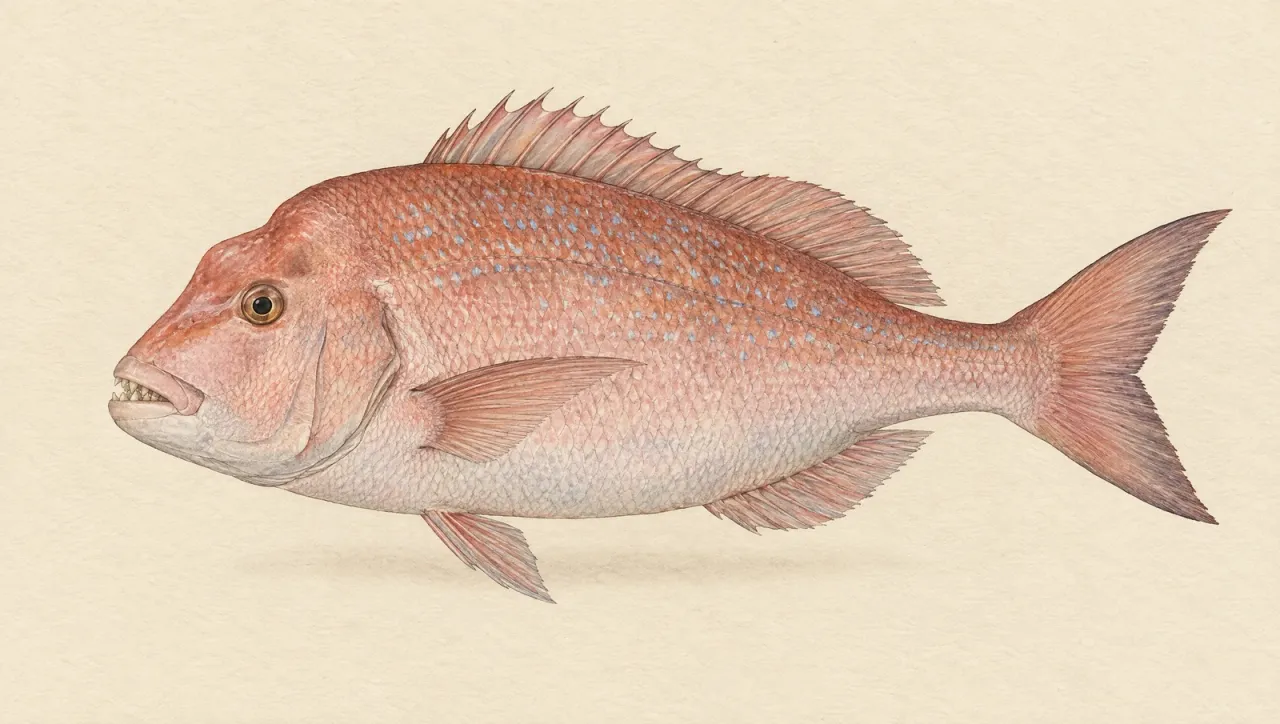
Chrysophrys auratus is a sparid (sea bream family) distinguished by bronze-pink flanks, a humped forehead in larger specimens, and the red tinge that gives the species its colloquial name “reds.” VFA records snapper to over 90cm and several kilograms on the Peninsula grounds, though fish in the 35 to 50cm range are the typical legal catch. Locals call smaller legal fish “pinkies” (a cohort with its own dedicated species page because the bag and size profile differs). Fish over 40cm are sometimes called “knobbers” or simply “big reds.” VFA also lists the species under “squire” for juveniles.
Snapper behaviour on the Peninsula is overwhelmingly tide-driven. In Port Phillip Bay, fish move onto the southern grounds (the reef edges and rubble patches between Portsea and Rye) as water temperature rises through October. In Western Port, the tidal flush through the Hastings and Stony Point channels concentrates baitfish and, with them, snapper. The single most reliable tide pattern for Port Phillip snapper is the twilight burley drift: anchor up-current of a reef edge one hour before dusk, lay a steady burley trail, and wait for the current to do the work. Fish taken during flat-water midday sessions are the exception.
Table qualities are exceptional. The flesh is firm, white, and moderately flavoured, robust enough for roasting and pan-frying with skin on, delicate enough to eat raw. Peninsula chefs who source locally treat a whole 40cm snapper as a premium raw ingredient. This is the species that drives the strongest cross-traffic between the Peninsula’s fishing and dining communities.
Season and tide
The October to December peak is not a calendar abstraction; it is driven by water temperature. When the southern bay climbs above 15 to 16°C, snapper metabolic rates accelerate and they move aggressively onto burley trails. Monitor sea surface temperature forecasts alongside your tide charts; in a cool spring, the reliable bite may not arrive until early November.
The tide rule. The best Port Phillip Bay snapper fishing occurs on a building tide, typically the two hours either side of the tide peak, at dawn and dusk. Flat-water midday sessions produce fish occasionally but are not the reliable pattern. The bottom of the tide (dead low) is the worst window; current absence means burley disperses ineffectively. Western Port’s stronger tidal exchange means the bite window is broader, but the principle holds: moving water concentrates snapper.
Dawn and dusk runs. The most consistent sessions are twilight-timed. The hour before sunrise and the hour before sunset are the canonical windows cited by Peninsula charter skippers. Snapper are visual predators that use low-light conditions when hunting over reef.
For current tide predictions at the southern bay, use the BOM tide predictions for Portsea or the Willyweather tide tables for Stony Point (the primary Western Port reference station).
Technique and gear
The canonical Peninsula snapper technique is anchor-and-burley over a hard bottom (reef, rubble, or sand-reef edge). Locate structure with a sounder at 6 to 18m depth, anchor up-current, and deploy a steady burley trail of minced pilchard and tuna oil. Fish bait rigs directly in the burley lane.
- Rod. A 7 to 8 foot, 4 to 8kg graphite rod with a moderate-fast action. Shorter rods are sufficient for boat sessions; a longer 9-foot rod helps manage bait presentation on deeper drifts.
- Reel. A 4000 to 5000 size fixed spool reel with a smooth drag. Braid mainline of 20 to 30lb with a 40 to 50lb fluorocarbon leader of 1 to 1.5m is the standard Peninsula setup.
- Rigs. The running sinker rig (ball sinker above a swivel, 50 to 80cm leader to a 4/0 to 6/0 circle or suicide hook) is the most common. A paternoster rig with two hooks is also effective at anchor, particularly during an active burley trail. For lure work, a 4 to 6 inch paddletail soft plastic on a 1/4 to 3/8oz jighead fished over the reef edge produces fish, particularly during the October arrival.
Bait
Fresh squid and fresh pilchard are the first-choice baits. Fresh is critical. Snapper investigate burley trails with their lateral line as much as their vision, and frozen-thawed bait that has lost its oils is a significant step down. Whole squid hood on a ganged hook (3 by size 4/0) is considered the premium presentation for larger fish; the squid holds together on the hook and releases oil steadily. Half-pilchards pinned through the body on a single circle hook are the workhorse for volume sessions.
Pipis and fresh mussels are secondary options that attract fish but produce less consistent results than squid. Bass yabbies fished on a lighter snapper rig take pinkies reliably in summer.
Local tackle stores across the Peninsula stock frozen squid and pilchard year-round. Fresh squid is available from operators who target southern calamari through autumn and early winter.
Bag and size limits, licence
- Minimum size limit. 28cm total length, measured tip of lower jaw to end of tail.
- Bag limit. 10 per person per day. No more than 3 fish may equal or exceed 40cm in length (the slot restriction protects the spawning-capable adult population). Strictly enforced.
- No-fillet rule. Snapper cannot be filleted in or on Victorian waters. Keep whole or in carcass form until away from the water. Filleting at boat-ramp cleaning tables is permitted.
- Season. Open year-round. No closed season for snapper in Victoria.
- Licence. A Victorian Recreational Fishing Licence is required for anglers aged 18 and over. Exemptions apply to children under 18 and to anglers fishing from a licensed charter vessel.
- Marine Protected Areas. Some zones in Port Phillip Bay and the Mornington Peninsula National Park have fishing restrictions. Check Parks Victoria before fishing near Point Nepean and the Heads.
Source: Victorian Fisheries Authority. Last fact-verified Thu, 30 Apr 2026.
Opportunity ranking by location
A ranked list of the best opportunities for a typical angler targeting snapper. Combines location quality, access, tide reliability, and seasonal consistency.
- Western Port (Hastings to Stony Point), boat, anchor-and-burley, October to December, building tide. Western Port’s enclosed tidal environment and strong current concentrates baitfish and snapper more reliably than the open bay. The Hastings to Stony Point corridor, fished from Hastings Boat Ramp, is the single most consistent Peninsula snapper ground from October through December.
- Southern Port Phillip Bay (Portsea to Rye reef edge), boat, anchor-and-burley, October to December, dusk run. The outer bay reef edges produce the largest fish of the season, particularly in November and December. Requires a sounder to locate the rubble patches at 8 to 14m. Best accessed from Sorrento Boat Ramp.
- Port Phillip mid-bay channel edges, boat, drift with soft plastics or running sinker, November to January, moving tide. A secondary season exists through summer on mid-bay structure. Less reliable than the reef-edge burley bite but produces fish when the main run has spread.
- Mornington Pier, land-based, running sinker with squid, October to December, evening run. The most accessible land-based snapper option on the northern Peninsula coast. Evening sessions on a building tide from October take legal fish, though volumes are lower than boat fishing.
- Flinders Pier, land-based, October to December, night tide. Bass Strait-edge pier; the deeper water and Bass Strait influence makes it productive when the main bay run is active.
Cross-link: licensing and licence cover on charters
If you’re booking a charter for the snapper season, confirm the licence arrangement at the time of booking. Most licensed Peninsula charters cover guests under the operator’s licence for the day, but operator practice varies. Browse the Peninsula fishing charters hub for editorial comparison across operators by species and season.
Where to catch snapper on the Peninsula
- Flinders Pier · Bass Strait fringe · April to July (squid peak); November to March (whiting)
- Mornington Pier · Port Phillip Bay · October to April for snapper; year-round for squid
- Portsea Pier · Port Phillip Bay
- Rye Pier · Port Phillip Bay · November to March (whiting); April to June and September to November (squid peaks)
- Cowes Jetty · Western Port · October to March (snapper); November to March (whiting)
- Hastings Jetty · Western Port · October to March (snapper); November to March (whiting); year-round (flathead, bream)
- Point Leo Beach · Bass Strait fringe · April to August (winter salmon run); October to March (snapper opportunistic)
- San Remo Jetty · Western Port · October to March (snapper); November to March (whiting); year-round (squid)
- Stony Point Pier · Western Port · October to December (snapper); October to March (whiting); March to June (squid)
Charter operators that target snapper
- I'm Hooked Fishing Charters · Licence covered
- Proline Charters
- Reel Time Fishing Charters
Operators are listed because they demonstrably target snapper, not as a default reference. Browse all Peninsula charters to compare across species and seasons.
Where to cook your catch
Frequently asked questions
Do I need a fishing licence to catch snapper in Victoria?
Yes. A Victorian Recreational Fishing Licence is required for all anglers aged 18 and over fishing in Victorian waters. Licences can be purchased online via the VFA website, through Service Victoria, or from authorised agents including many tackle stores. Anglers fishing from a licensed charter vessel are generally covered by the charter's licence arrangements; confirm with your operator before the trip.
When is the best time to fish for snapper on the Peninsula?
October through December is the definitive snapper peak on the Mornington Peninsula. The run is triggered by rising water temperatures in the southern bay, typically when sea surface temperature exceeds 15°C in mid-October. November is statistically the highest-volume month. The best sessions are timed to the two hours either side of dusk or dawn on a building tide.
Is there a closed season for snapper in Port Phillip Bay?
No. Snapper in Victoria are open year-round. There is no closed season under current VFA regulations.
What is the bag limit for snapper in Victoria?
The bag limit is 10 per person per day. Of those 10, no more than 3 fish may equal or exceed 40cm in length. This slot restriction protects the spawning-capable adult population. Source: VFA. Last fact-verified Thu, 30 Apr 2026. Confirm with VFA before fishing.
Can I fillet snapper on the boat?
No. Snapper cannot be filleted in or on Victorian waters. Fish must be kept whole or in carcass form until away from the water. Filleting at boat ramp cleaning tables is permitted.
What is the best bait for snapper in Port Phillip Bay?
Fresh squid and fresh pilchard are the first-choice baits. Fresh is critical; snapper investigate burley trails with their lateral line as much as their vision, and frozen-thawed bait that has lost its oils is a significant step down. Whole squid hood on a ganged hook (3 by size 4/0) is the premium presentation for larger fish. Half-pilchards on a single circle hook are the workhorse for volume sessions.
Verified stamp
Key facts last verified Thu, 30 Apr 2026 against the Victorian Fisheries Authority. If any bag limit, size limit, or licence requirement on this page differs from VFA's current guidance, VFA's current guidance takes precedence. Regulations change. Confirm before fishing.