The short version
- A practical guide to the Mornington Peninsula in wet or cold weather - structured around what actually improves in the rain versus what to avoid on a grey day.
- The editorial argument: cellar doors, hot springs, and hatted restaurants are all better in cool, wet weather when the Peninsula is quieter and the experience is more genuine.
- Key recommendations: cellar door tastings as the primary rainy-day activity (not impacted by weather); Peninsula Hot Springs in rain (the experience improves when fewer people are outside); the Peninsula's best all-weather cafés.
- Suits: visitors who have arrived on a grey day; anyone who wants to understand that the Peninsula's strongest experiences are not weather-dependent.
- Planning note: most of what visitors regret missing on the Peninsula can be done in any weather. The walks in rain are harder but the cellar doors are easier to get into.
There is a version of the Peninsula that only reveals itself in bad weather, and most visitors never meet it.
The bay goes grey. The ridge fog closes in on the wineries. The back beaches at Sorrento turn moody in a way that makes photographs impossible but makes walking along them unexpectedly beautiful. The fires get lit at 11am in the dining rooms that have them. And, crucially, the bookings that were locked out three months ago suddenly become available.
If you are flexible about when you come, the rainy Peninsula weekend is often the better version of the trip. This is the planned version, built around advance bookings at the hot springs and one of the region’s fireplace dining rooms. If the forecast caught you off guard and you have nothing booked, see The Rainy-Day Peninsula Without a Booking.
Accept that some things are closed
First, the honest note. Winter on the Peninsula, or any genuinely wet weekend, will shut down a few of the options you might have been counting on. Most of the smaller beach kiosks will be closed. Some of the boutique cellar doors drop to reduced hours. The winery restaurants with outdoor terraces become less interesting because the terraces are not the point anymore. And a handful of the coastal walks get genuinely dangerous when the wind picks up, Bushrangers Bay and the Cape Schanck boardwalk are both worth checking the conditions on before you commit.
The day works best built around the things that are better in bad weather.
The hot springs are the headline
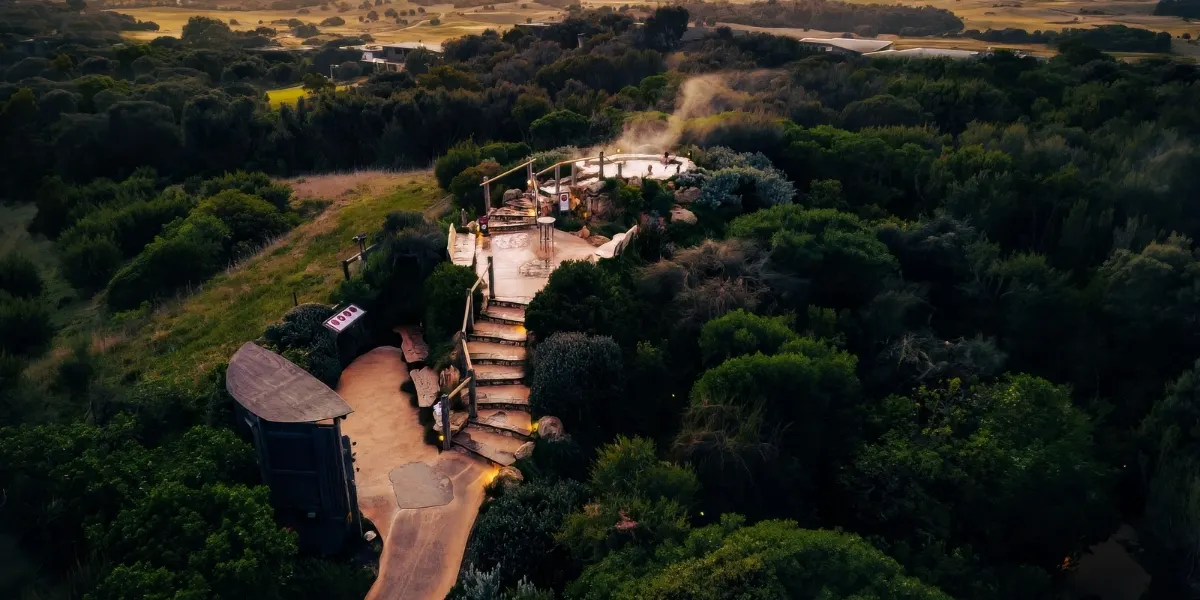
The single most reliable rainy-day move on the Peninsula is a morning at one of the two thermal spring complexes. Alba Thermal Springs & Spa is the newer and more architecturally considered of the two; Peninsula Hot Springs is the older and larger original. Both are outdoor bathing, both are heated year-round from geothermal sources, and both are unexpectedly better in bad weather than in good weather. Steam rising off the water against a grey sky is the whole point.
Alba caps bather numbers properly, which makes a winter morning session here feel like a European bath day rather than a tourist attraction. Peninsula Hot Springs is more ambitious in scale and has better private booking options. Pick one, book an early session, and don’t try to combine them in the same weekend.
The dining rooms improve
The Peninsula’s serious restaurants all have one thing in common: they are better in winter than in summer. The reason is simple, most of them are built around wood fires or wood ovens or fireplaces, and the cooking that the kitchens want to do leans toward the cold-weather plates. Braises, roasts, heavier pasta, longer wines.
Tedesca Osteria is the specific case. Brigitte Hafner’s set menu in winter pulls the wood oven into almost every course, and the dining room, with its open fire and farmhouse bones, does its best work in July and August. This is when to book. Lunch, not dinner. Two nights on the Peninsula so you don’t have to drive home in the rain.
Lindenderry at Red Hill is the matching stay. The country-house architecture, the lounge fires, and the understated dining room are all built for the season. Book a room with a view of the garden rather than the vineyard.
The indoor moves that save the day
A handful of specific spots turn wet-weather Peninsula weekends from a compromise into a plan:
Mornington Peninsula Regional Gallery. Free entry, good shows, and fifty minutes well spent. The best wet-afternoon move on the bay side.
Bass & Flinders Distillery. The gin school is one of the region’s better hands-on afternoons, and a grey sky costs it nothing. Book ahead.
Red Hill Brewery. The cellar door is a low barn with a wood-fired pizza oven and enough indoor seating to sit out a genuinely wet afternoon. The hop garden walk is better in autumn than summer anyway.
A long lunch followed by a long nap. Book a two-night stay at a property with a proper room, eat lunch at one of the Red Hill wineries, and spend the afternoon reading a book in the kind of armchair the region specialises in. This is the version of the Peninsula trip that most resembles a real holiday.
The weekend structure that works
A forecast-led rainy Peninsula weekend looks roughly like this:
Friday evening: drive down after work, check into Lindenderry or a similar country-house stay. Dinner on property. Early night.
Saturday morning: slow start, breakfast on the property, ten o’clock drive to Alba Thermal Springs for a 90-minute session.
Saturday lunch: Tedesca or Ten Minutes by Tractor, whichever you can book. Go long. Don’t schedule anything afterwards.
Saturday afternoon: nap. Then a short walk around the property grounds between showers.
Saturday evening: drinks by the fire, something light for dinner, another early night. This is the winter version of the weekend; it isn’t meant to be run hard.
Sunday: the gallery in Mornington on the way home, coffee at Commonfolk, back to the city by three.
What this version of the trip gives up is the bright-day Peninsula: the sculpture parks, the long ridge drives, the dusk walks on the back beach. What it gains is space, silence, and the rooms you have been trying to book for months.
Peninsula weather is a selector for which trip you are actually taking. Some of the best weekends down here happen in the rain.
Something wrong on this page, or is this your business? Tell us what to fix and you get a case reference back. corrections@peninsulainsider.com.au reaches the same desk.
Questions readers actually ask
FAQ
Is the Mornington Peninsula worth visiting in bad weather?
Yes - often more so than in good weather. The hot springs are better in the cold, the best dining rooms light their fires, booking availability improves, and the coastal walks become dramatic rather than simply scenic. Build the day around indoor anchors and the weather becomes an asset.
What is the best rainy day activity on the Mornington Peninsula?
Alba Thermal Springs or Peninsula Hot Springs - outdoor geothermal bathing is better in cold, grey weather. For indoor alternatives: Bass and Flinders Distillery gin school, Mornington Peninsula Regional Gallery (free entry), or Red Hill Brewery's indoor barn with wood-fired pizza.
Which Peninsula restaurants are best for a rainy day?
Tedesca Osteria in winter - the wood oven and open fire work hardest in cold weather and the set menu leans into braises and heavier plates. Lindenderry's dining room is built for winter. Both are significantly more atmospheric on a grey day than in summer.