
Last fact-verified Thu, 30 Apr 2026 against Victorian Fisheries Authority. If any bag limit, size limit, or licence requirement on this page differs from current VFA advice, VFA's current guidance takes precedence.
Quick facts
| Common name | Southern Calamari |
| Scientific name | Sepioteuthis australis |
| Also known as | squid, calamari |
| Bag limit | 10 per person per day, combined total for squid, calamari, octopus and cuttlefish (outside restricted areas) |
| Minimum size limit | No minimum legal size |
| Season | March to June (autumn aggregation) |
| Primary water | Port Phillip Bay (also Western Port) |
| Licence required | Yes. Victorian Recreational Fishing Licence required. |
Source for bag limit, size limit, and closed season: VFA species page. Last fact-verified Thu, 30 Apr 2026.
What southern calamari actually is
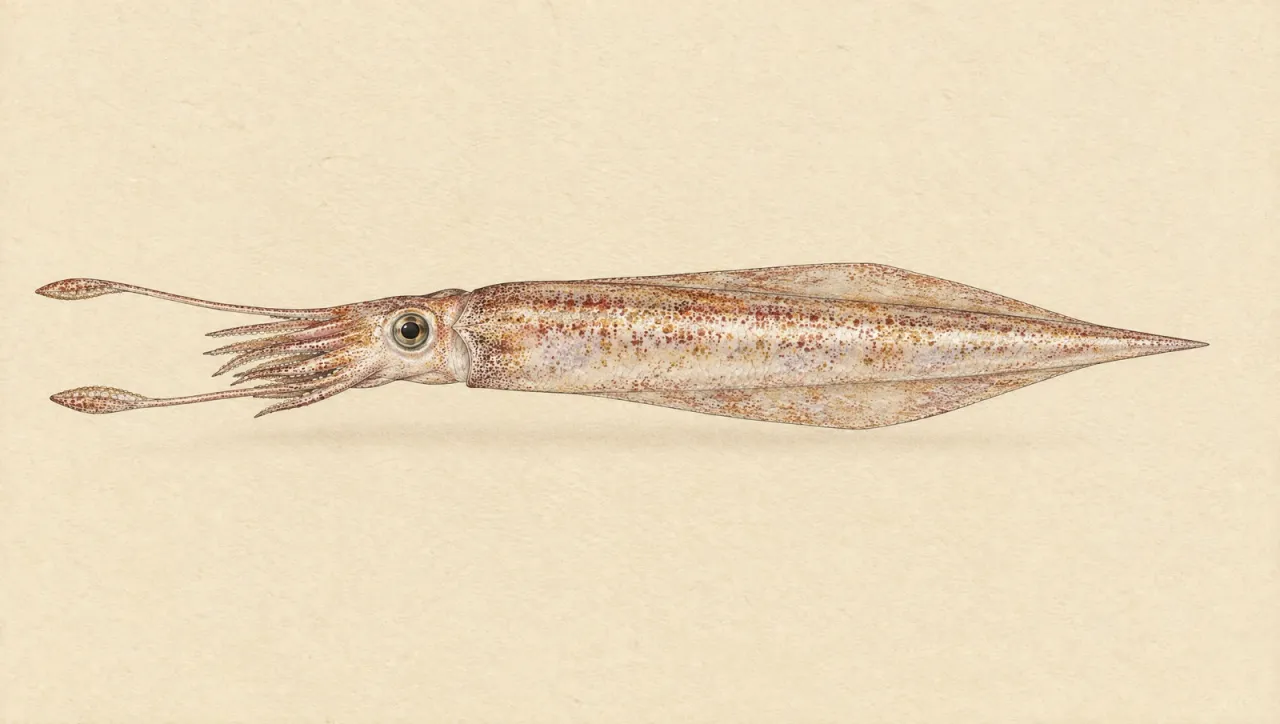
Sepioteuthis australis is a cephalopod, not a fish, a distinction with practical implications for handling and preparation. Southern calamari has a mantle length reaching approximately 40cm (a large specimen on Peninsula grounds), with eight arms and two tentacles, a transparent internal “pen” running the length of the mantle, and the characteristic ink sac used defensively. Locally, “squid” and “calamari” are used interchangeably; “calamari” is the more precise name for Sepioteuthis australis, while “squid” encompasses multiple species. The VFA uses both terms.
Calamari behaviour on the Peninsula is strongly associated with structure and light. At night, they aggregate under jetty lights hunting baitfish attracted by the illumination; this is the iconic Peninsula pier squid experience. During the day, they hold in kelp beds, reef edges, and seagrass margins in 2 to 10m of water, best targeted with a slow-sinking squid jig worked through the kelp canopy. The autumn aggregation (March to June) is the result of maturing adults moving into shallower water before spawning; this cohort contains the largest individuals of the season and the highest reliable densities. Summer calamari (December to February) are predominantly juveniles and sub-adults, catchable but smaller.
The eating quality is beyond reproach. Cleaned within minutes of landing (the freshness window is short and degradation rapid), the flesh is sweet, firm, and versatile. The classical Peninsula preparation is dusted tubes fried at high heat for 60 seconds; over-cooking produces the rubber the species is unfairly blamed for. Every Peninsula restaurant with a serious seafood offering includes calamari during the autumn season.
Season and tide
Calamari fishing is less strictly tide-dependent than whiting or snapper, but tide conditions influence squid movement and accessibility significantly.
Light and dusk. For pier fishing, the transition from daylight to darkness (the 30 minutes either side of sunset) is consistently the highest-activity period. Calamari move into the water column near lights as baitfish concentrate under the illumination. A night session beginning at dusk and running to 2100 covers the best window at jetty locations.
Tide and current. At reef and kelp edges, a slow tidal run moves calamari off the bottom and into the water column, where a slow-sinking jig is more visible. In completely flat water, squid settle deep into the kelp and are harder to intercept. A mild current is preferable; heavy current makes jig presentation difficult.
Water clarity. Calamari respond to visual presentation; water clarity matters more for squid jigging than for most other Peninsula species. Post-rain turbid conditions suppress the bite. Clear water after a few calm days is optimal.
Consult BOM tide predictions or Willyweather for the Portsea reference station when planning pier sessions.
Technique and gear
Squid jigging (egi fishing) is the dedicated technique, a Japanese-derived method now dominant in Australian pier squid fishing.
- Rod. A 7 to 8.5 foot, 1 to 4kg egi-specific or light spinning rod with a soft-tip action that telegraphs squid grabs clearly. Standard spinning rods work; egi-specific rods improve sensitivity and lure presentation.
- Reel. A 2500 to 3000 size fixed spool. 8 to 12lb braid mainline with a 10 to 12lb fluorocarbon leader of 1.2 to 1.5m. Fluorocarbon is mandatory; squid are highly line-shy in clear water.
- Jig (egi). A weighted artificial lure with prawn-like colouring and a double row of upward-facing barbless hooks at the tail. Sizes 2.0 to 3.0 cover the Peninsula range; 2.5 is the workhorse autumn size. Colour selection varies; pink/orange, natural shrimp tones, and chartreuse purple all produce. Change colours if the chosen one is not producing within 20 minutes.
- Technique. Cast the jig, count down to depth (a slow-sink jig at a pier takes 15 to 30 seconds per metre), then twitch the rod tip once or twice and pause. The squid grabs the stationary jig during the pause. Do not strike hard. Wind up the slack and maintain pressure. Squid have a soft mantle and hard strikes pull the jig out.
Bait versus jigging
Calamari can be caught on bait (a small piece of fresh pilchard or prawn on a single hook suspended under a float at pier depth), but bait fishing for squid is significantly less efficient than jigging. The jig covers more of the water column and triggers reactive strikes from cruising squid that a stationary bait does not. Bait fishing is an acceptable introduction for beginners who do not yet own jigs; jigging is the method of choice once the technique is learned.
Bag and size limits, licence
- Minimum size limit. No minimum legal size.
- Bag limit. A combined total of 10 per person per day for squid, calamari, octopus and cuttlefish (outside restricted areas).
- Season. Open year-round.
- Marine Protected Areas. Fishing is restricted in certain marine sanctuary zones around the Mornington Peninsula National Park. Confirm Parks Victoria restrictions before fishing near Point Nepean.
- Licence. A Victorian Recreational Fishing Licence is required for anglers aged 18 and over.
Source: Victorian Fisheries Authority Recreational Fishing Guide. Last fact-verified Thu, 30 Apr 2026.
Opportunity ranking by location
- Blairgowrie Pier, jig, dusk to 2100, March to June. The Peninsula’s most reliable land-based squid location during the autumn peak. The pier extends into deep water with consistent kelp and structure on both sides; jetty lights aggregate baitfish at dusk and squid follow. Weeknight sessions are quieter; the weekend crowd is significant.
- Portsea Pier, currently closed. Parks Victoria prohibits public access during major maintenance from 20 July 2026. Do not plan a pier session there until the authority confirms reopening; see the current access notice.
- Sorrento Pier, jig, dusk and night, year-round (peak Mar to Jun). Reliable both inside and outside the autumn peak; the sand flat extending northeast holds squid year-round.
- Rye Pier, jig, dusk, year-round. The pier’s length and accessible parking make it a strong family-friendly squid option. Autumn sessions are the most productive.
- Reef and kelp edge, boat, slow drift with jig, March to June. The boat option for serious squid anglers targeting size; small-engine vessel hugging the kelp lines from Sorrento to Blairgowrie produces consistently in the autumn aggregation.
Where to catch southern calamari on the Peninsula
- Mornington Pier · Port Phillip Bay · October to April for snapper; year-round for squid
- Portsea Pier · Port Phillip Bay
- Rye Pier · Port Phillip Bay · November to March (whiting); April to June and September to November (squid peaks)
- Cowes Jetty · Western Port · October to March (snapper); November to March (whiting)
- Flinders Pier · Bass Strait fringe · April to July (squid peak); November to March (whiting)
- Safety Beach Foreshore · Port Phillip Bay · November to March (whiting and garfish); year-round (squid)
- San Remo Jetty · Western Port · October to March (snapper); November to March (whiting); year-round (squid)
- Stony Point Pier · Western Port · October to December (snapper); October to March (whiting); March to June (squid)
Charter operators that target southern calamari
- I'm Hooked Fishing Charters · Licence covered
- Reel Time Fishing Charters
Operators are listed because they demonstrably target southern calamari, not as a default reference. Browse all Peninsula charters to compare across species and seasons.
Where to cook your catch
Frequently asked questions
When is the best time to catch squid on the Peninsula?
The autumn aggregation, March through June, is the highest-density window of the year. Adult squid move into shallow kelp and pier-shadow water before spawning, which produces the largest individuals and the most reliable sessions. Year-round availability from the piers makes squid a useful fallback species outside the peak.
What is the bag limit for squid in Victoria?
A combined total of 10 per person per day for squid, calamari, octopus and cuttlefish (outside restricted areas). There is no minimum legal size. Open year-round. Source: VFA. Confirm before fishing.
What's the difference between squid and calamari?
"Squid" and "calamari" are used interchangeably in conversation along the Peninsula. Technically, "calamari" is the more precise name for Sepioteuthis australis (southern calamari), the dominant species on Peninsula grounds. The VFA uses both terms. The bag limit is combined under the same category as octopus and cuttlefish.
Do I need a fishing licence to catch squid?
Yes. A Victorian Recreational Fishing Licence is required to take squid from Victorian waters for anglers aged 18 and over. Children under 18 are exempt. Anglers fishing from a licensed charter vessel are generally covered by the operator's licence; confirm at booking.
What is the best squid jig size for Peninsula squid jigging?
A 2.5 size egi is the workhorse for autumn squid on the Peninsula. The size 2.0 to 3.0 range covers the Peninsula's squid sizes. Carry a selection of colours (pink/orange, natural shrimp, chartreuse purple) and switch if the chosen colour is not producing within 20 minutes.
Verified stamp
Key facts last verified Thu, 30 Apr 2026 against the Victorian Fisheries Authority. If any bag limit, size limit, or licence requirement on this page differs from VFA's current guidance, VFA's current guidance takes precedence. Regulations change. Confirm before fishing.