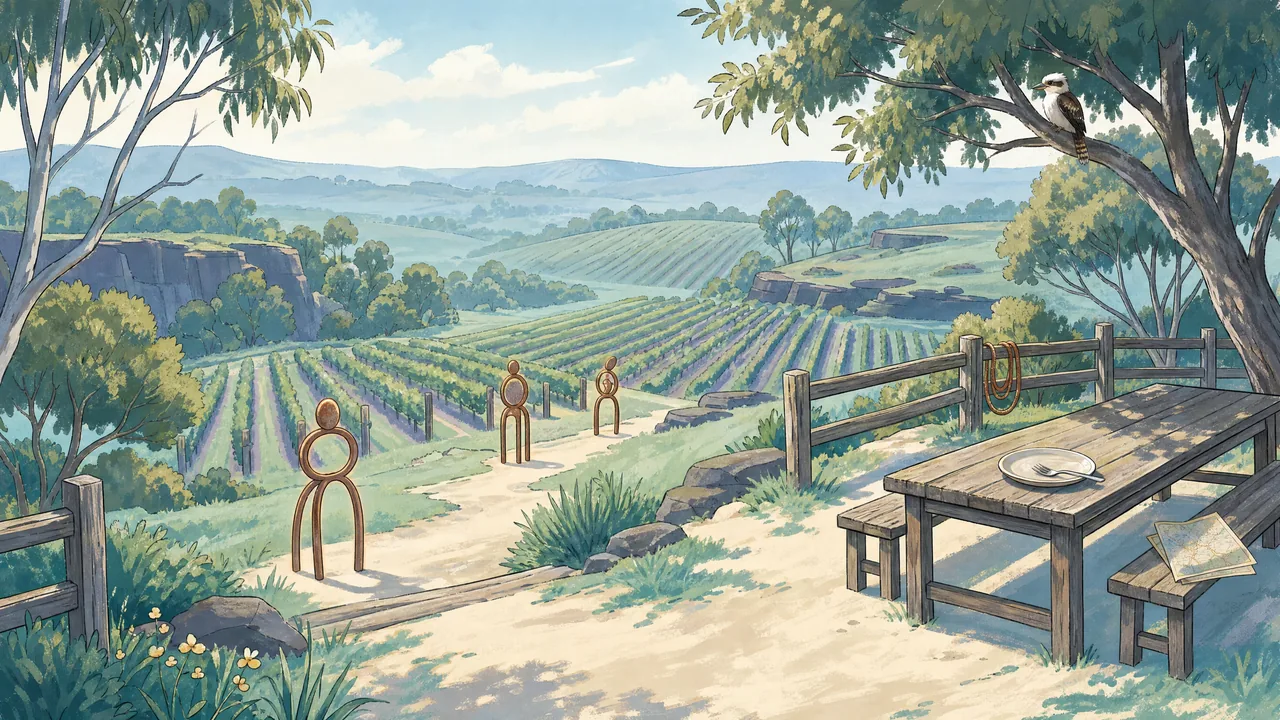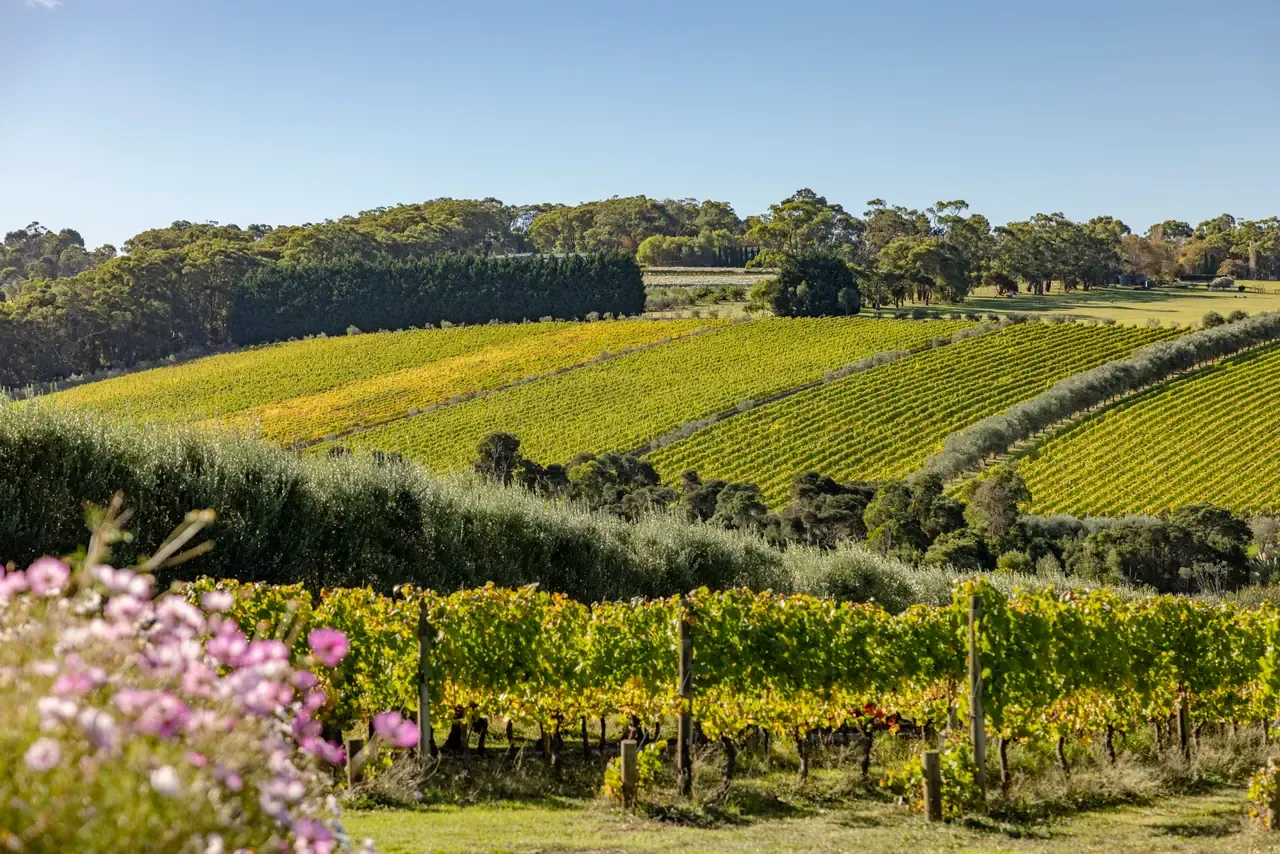
There is a three-week window in the middle of October when the Mornington Peninsula is at its quiet best, and almost no one comes down for it.
The vines are a week past bud-burst. The paddocks are fluorescent green in a way they are not any other month. The ridge mornings are crisp enough for a jumper but the afternoons reach the low twenties. The cellar doors are just starting to open seven days again after the winter appointment-only schedule, and the first spring tastings are fresh on the shelves. The walking tracks are at their flowering peak. The back beaches are empty and clean, still two months out from the Christmas crush, and the water temperature is nudging toward something you would swim in.
It is the season the locals quietly prize and the visitors overlook.
April and May get written about as the Peninsula’s secret months because that is when the vineyards turn gold and the last warm days of summer coincide with the cellar-door calendar. Spring is the mirror version: the same quiet crowd, the same soft weather, the same uncrowded restaurants, pointing in the opposite direction. Instead of winding down toward winter, everything is coming back. The energy is different. You feel it in the rooms, in the market stalls, in the plants, in the first new asparagus and the first spring wildflowers in the heath.
If you are looking at the calendar, September and October are the answer. Here is why, and how.
Why spring works on the Peninsula
Start with what the weather does. Melbourne gets a reputation for erratic spring, and the Peninsula follows the same basic pattern, but with two structural advantages: the bay tempers the cold fronts, and the ridge traps enough afternoon sun that by one in the afternoon the vineyards are in the high teens even when the city is still grey. A typical mid-October weekend on the Peninsula runs something like morning fog off the bay, a clear crisp morning by 9am, and blue afternoons topping out around 20–23 degrees. Evenings cool quickly, which is the right kind of weather for a dining room with a fire still in it.
The calendar benefits are considerable. Cellar doors, producers and markets begin changing their hours as spring arrives, so check each venue’s current opening days. The original Red Hill Community Market is temporarily closed. The separate Hill & Ridge Community Market publishes its own dates at Red Hill Recreation Reserve, including Saturday 3 October 2026, 9am–2pm. Check the organiser’s calendar before making it part of a weekend plan.
The landscape is distinctive. The Peninsula’s hinterland is a patchwork of coastal scrub, vineyard rows, and remnant eucalypt bush, and all three of those layers come back into life dramatically in September. The heath on the way to Bushrangers Bay is flowering through late September. The Greens Bush area on the Two Bays walking track has wildflowers through October. The vineyards are at their most architectural in spring: the bare trellises from winter acquire a pale green fringe that transforms the entire plateau over about ten days.
The spring weekend: a proposed shape
Here is the weekend we would recommend for a first-time spring visitor.
Friday
4pm: Arrive at your base. Spring rooms are both available and cheaper than the autumn equivalents. Lindenderry is particularly good in spring because the gardens are in their early bloom, and the dining room is transitioning from winter stews to spring produce. Polperro Villas and Crittenden Villas are both well-placed for a ridge-focused weekend. Flinders Hotel is the bayside-to-Cape alternative, and in spring the Cape Schanck weather is typically kinder than in autumn.
6pm: A pre-dinner walk. Daylight is back: sunset is around 7pm in early September and close to 8pm by the end of October, so you have time for a proper walk before dinner. Around Red Hill, a short hinterland loop. Around Flinders, the village-to-pier walk. Around Sorrento, the Coppins Track or a bay foreshore amble.
7.30pm: Dinner. Spring dining is the shoulder between braising-winter menus and full summer vegetable menus, and the best Peninsula dining rooms use this moment well. Tedesca Osteria in spring sees the first asparagus, broad beans, and peas come through the menu, and the wood oven settles into its lighter mode. Merricks General Wine Store handles the same transition cleanly. Bistro Elba in Mornington is an underrated pick for the first night.
Saturday
9am: If your Saturday matches a confirmed Hill & Ridge Community Market date, start at Red Hill Recreation Reserve. The organiser lists Saturday 3 October 2026, 9am–2pm. On other weekends, start with a booked breakfast or a producer stop on the ridge instead; check opening hours before travelling.
9.30am: A walk. Spring rewards the walks that winter makes uncomfortable. The Bushrangers Bay Walk from Cape Schanck is at its best through September and October: the heath above the track is in full flower, the descent to the beach is comfortable, and the return climb is rewarded with warmer air than you would get on the same walk in July. The Farnsworth Track at Arthurs Seat is a shorter spring alternative with the same wildflower benefits.
12.30pm: Cellar-door lunch. The heart of the day. The ridge cellar doors are reopen, the waiting lists are lenient, and the winemakers are often at the cellar doors themselves, which is an experience you cannot get in December or January. Montalto in spring is particularly good for the sculpture grounds; the gardens are at their freshest and the walking trail is pleasant. Ten Minutes by Tractor and Polperro are both running their winter release flights alongside the first spring tastings. Paringa Estate reopens its cellar-door dining space around September with one of the best value tasting menus on the Peninsula.
3pm: Producer loop or lookout. A quick loop on the way back down the ridge: Main Ridge Dairy, Red Hill Cheese, and, if the day is warm enough, a quick stop at Arthurs Seat Eagle for the gondola ride. The spring view from the summit is among the clearest of the year, with the bay, the vineyards, and the horizon between Melbourne and the Bellarine in sharp focus.
4.30pm: Back to the base. A nap, a glass of something cold, a slow afternoon in the spring garden of whichever stay you picked.
7pm: A quieter dinner. The second night is for something less formal. The pub at Flinders Hotel, the wine bar at Allis or Many Little in Mornington, the casual terrace at Pt Leo Estate if you want to combine dinner with the sculpture park at dusk.
Sunday
8.30am: The bay coast. A spring morning walk along the Mornington or Mount Martha foreshore is one of the simpler Peninsula pleasures. The water is coming up to swimming temperature, the sand is clean, the bathing boxes are being repainted for the season. Walk an hour. The swim can wait.
10.30am: A late coffee. Commonfolk in Mornington or Johnny Ripe in Red Hill, depending on where your drive home starts.
11.30am: One last producer stop. Sunny Ridge Strawberry Farm is at its early-season best in October: the first picks of the year, the café open, the farm feeling fresh rather than tired. A half-hour visit is the right closing note.
12.30pm: Start driving home. Home by 2pm, an hour before anyone coming back from a longer weekend, with spring flowers on the back seat and wine bottles in the boot.
A few notes for the spring plan
- The water is warming but it is not yet warm. Walk the back beaches; save the swim for December.
- Spring is for the vegetable-forward mid-menu, not the full nine-course tasting. Save degustation for summer.
- Spring rewards walking and markets. The January plan in September misses the point.
- Spring weekends reward depth over width. One ridge, one village, one walk.
The quiet argument
The reason spring matters on the Peninsula is that it is the season when the region is most obviously alive. The vineyards are coming back into leaf. The markets are at their freshest. The walking tracks are flowering. The cellar doors are busy enough to feel like a destination but quiet enough to give you time. The dining rooms are at their cleanest, between winter braises and summer excess. Autumn winds down. Spring builds up.
Come in September. Come again in October. Do both if you can.
Every region has a best season. The Peninsula has two, and spring is the one nobody tells you about.
Something wrong on this page, or is this your business? Tell us what to fix and you get a case reference back. corrections@peninsulainsider.com.au reaches the same desk.
Questions readers actually ask
FAQ
Is spring a good time to visit the Mornington Peninsula?
September and October are among the Peninsula's best months. The vines return to leaf, wildflowers are on the coastal walks, and crowds are generally below summer levels. Check individual cellar-door hours and current market calendars before travelling; the original Red Hill Community Market is temporarily closed.
What's special about October on the Mornington Peninsula?
The vineyards are at their most photogenic: bare winter trellises acquiring spring leaf over about ten days. The heath walks (Bushrangers Bay, Farnsworth Track) are in full flower. Cellar doors run their first spring tastings alongside winter release flights, often with the winemakers present.
Can you swim at the Mornington Peninsula in spring?
Bay beaches (Mount Martha, Mornington foreshore) are swimmable from late October when the water nudges above 16–17°C. Ocean back beaches (Sorrento, Gunnamatta) are too cold and exposed for casual swimming until December; walk them in spring instead.