The Mornington Peninsula sells itself as pinot noir country and always has. Every tourism brochure, every estate map, every long-lunch menu leans on it. Pinot is the hero varietal, the grape that tells the cool-climate story, the thing the collectors came down from Melbourne to buy. None of this is wrong. The region does grow genuinely serious pinot noir, the kind that sits credibly alongside the Yarra Valley’s best at ten years of age, and the argument for pinot has been settled, mostly, for a decade.
But spend a morning tasting across Main Ridge and Red Hill in the last two or three vintages and a different conversation starts to emerge in the glass. The chardonnays have got measurably, impressively better. Tighter, more mineral, more restrained, more European in a way that the pinots are not quite managing. And the collectors, the private buyers who spend actual money on wine, who buy in cases rather than six-packs, have started to notice.
We have been tasting Peninsula chardonnay seriously for the last eighteen months. This is the case.
The weather got better
The most important thing to understand about chardonnay is that it is an honest grape. It reflects the vineyard and the winemaker with almost no interference, which is why California gets caramel, Burgundy gets flint, and the Peninsula gets, at its best, a narrow band of oyster-shell and white stone fruit that is genuinely distinctive.
The catch is that honest grapes are brutal on bad vintages. For a long time, Peninsula chardonnay was good in the warm years and merely competent in the cool ones, while the pinot thrived across both. Over the last four vintages that balance has inverted. The 2022, 2023, and 2024 chardonnays being released now were grown in conditions the Peninsula actually suits: cool but not mean, late ripening, good concentration without losing acid. The winemakers have spent the same period tightening their hand in the cellar, less oak, earlier picking, more lees work, restraint rather than ambition, and the wines are showing it.
The pinot has stayed excellent. The chardonnay has caught up, then edged ahead.
The six producers to taste to understand it
If you want the shortest possible introduction to the argument, compare wines from these six producers; confirm cellar-door access separately, as not all advertise public tastings. Better to pick three at a time across two visits than to chase all six in one day; our cellar door short list discipline explains why.
1. Kooyong, the benchmark, again
Kooyong’s single-vineyard Farrago Chardonnay is the wine most serious Peninsula drinkers will name if you push them to identify the region’s ceiling in white. The Farrago block sits on north-facing iron-rich soils on the Main Ridge and delivers a chardonnay that is structured, slow to open, and, crucially, ages for a decade without losing its line. It is not an easy wine. The first glass reads as reserved to the point of severity; the second glass is where the texture and the fruit arrive. This is the wine to taste if you want to understand what the Peninsula is actually capable of at the top end.
What to taste: the single-vineyard flight. Ask for the current and previous release Farrago back-to-back if it is available. The difference between a fresh release and a three-year-old bottle is the entire point.
2. Ocean Eight, the purity argument
Mike Aylward’s Ocean Eight makes the chardonnay we would personally put in a cellar before almost any other Peninsula white. The Aylward Chardonnay is worked minimally, wild fermentation, minimal new oak, long lees contact, and the result is a wine that tastes like the vineyard rather than the winemaker. Green apple, citrus pith, a saline backbone that reads as distinctly coastal, and the kind of quiet intensity that opens up slowly over an hour rather than arriving all at once.
This is a wine that needs to be drunk at the correct temperature (twelve degrees, not eight) and with a proper glass. Ocean Eight is not a tourism cellar door. Book ahead and treat the tasting as the serious twenty-minute commitment it actually is.
3. Port Phillip Estate, the accessible one
Port Phillip Estate sits in the same ownership as Kooyong and shares a cellar and some of the viticultural thinking, which means the chardonnays are made with the same attention as the Kooyong wines but released at a friendlier price. The Serrat-style single-vineyard work is among the best value on the Peninsula, and the estate’s main room, with its dramatic architecture and the Arthurs Seat view behind the cellar door, is also one of the more pleasant places to sit through a tasting.
What to taste: the Reserve Chardonnay, especially if the 2023 is still pouring. It is the wine we keep recommending to sceptics because it converts them.
4. Paringa Estate, the unfashionable benchmark
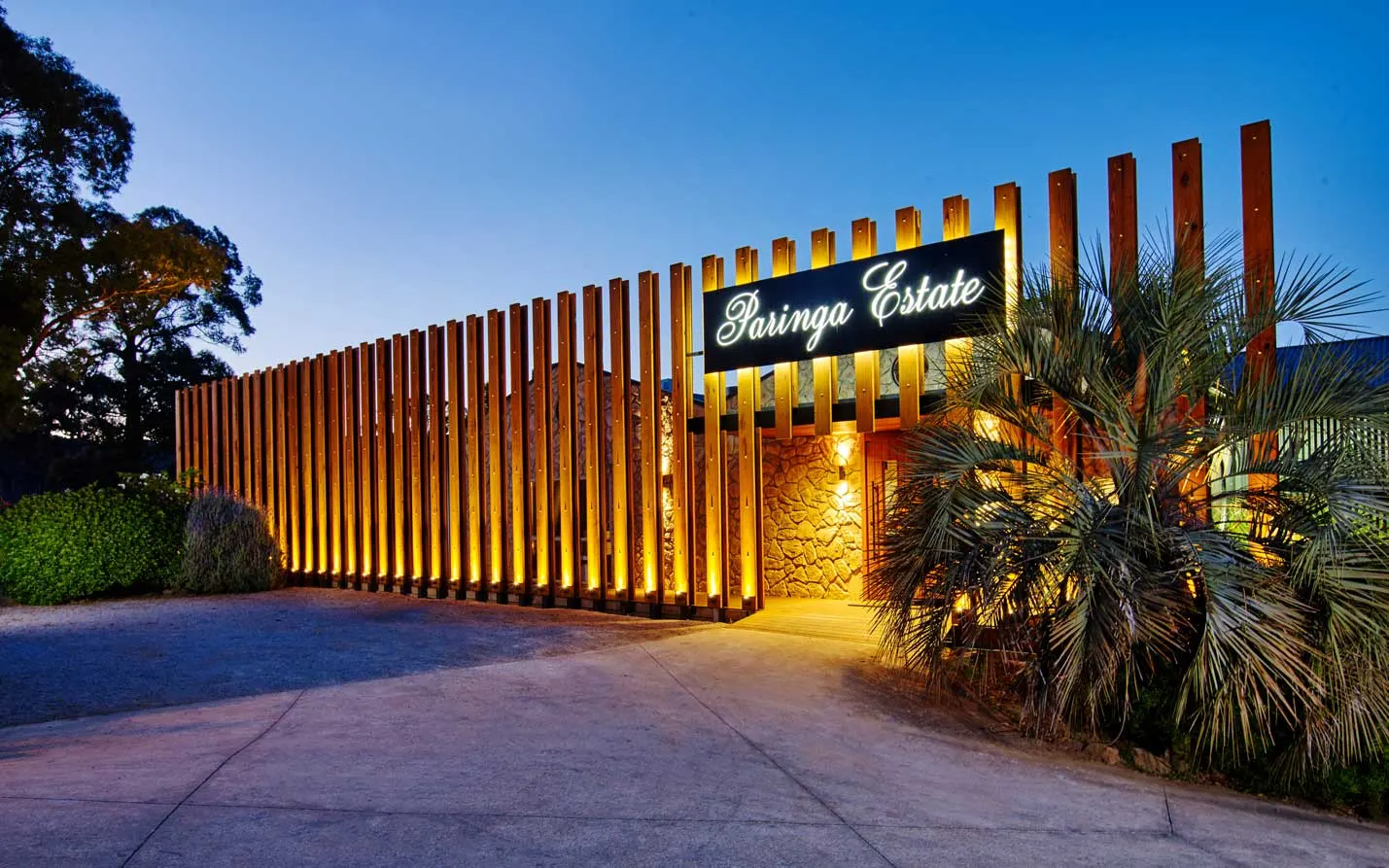
Paringa Estate has been making Peninsula chardonnay for longer than almost anyone else, and the Paringa Estate Reserve Chardonnay is the wine that won the international medals in the early 2000s when the Peninsula was still being dismissed as a boutique curiosity. The house style is richer than the newer producers, more oak, more malo, more texture, and for that reason it tends to get overlooked by the people chasing the tight, mineral, European-leaning wines. It rewards the second look. A ten-year-old Paringa Reserve Chardonnay is one of the most complete Peninsula whites you will taste, and the cellar door is one of the few places in the region where vertical tastings of older vintages are sometimes available on request.
5. Ten Minutes by Tractor, the restaurant wine
Ten Minutes by Tractor is best known as a hatted restaurant and a Wine List of the Year winner, but the estate wine program is the serious other half of the story. The single-vineyard chardonnays, Wallis, McCutcheon, Judd, are among the most compelling white wines being made on the Peninsula right now, in part because the kitchen next door provides a constant, brutal stress test for whether the wines actually work at the table. They do.
The cellar door tasting is tied to the restaurant’s rhythm and tends to be quieter on weekday mornings. Book the single-vineyard chardonnay flight specifically. If you can stay for lunch, this is also the room that makes the case for chardonnay with food most clearly. (See our review of the three serious dinners for the broader context.)
6. Dexter Wines, the single-vineyard producer
Dexter makes Pinot Noir and Chardonnay from its Tuerong vineyard. The producer sells its releases online; its current website does not advertise public cellar-door tastings. Buy a bottle if you want to compare its Chardonnay with the wines above, rather than making it a tasting stop.
What to buy
The shopping list:
- To drink this weekend: Ocean Eight Aylward Chardonnay (current release), or the Port Phillip Estate Reserve. Both reward being opened and drunk on the same day.
- To cellar for four to eight years: Kooyong Farrago Chardonnay and Ten Minutes by Tractor single-vineyard chardonnays. These reward patience and punish opening early.
- To cellar longer than eight years: Paringa Estate Reserve, and, if you can find it, older back-vintage Kooyong. A twelve-year-old Peninsula chardonnay is a wine most Australians have never tasted. It is worth the experiment.
- For everyday drinking: any of the producers’ second labels. These are often the sweet spot for price and drinkability, and they give you a closer read on the vintage than the reserve bottles.
Why this matters
The reason the chardonnay conversation matters is not parochial pride. It is that the Peninsula’s pinot noir has a well-documented ceiling, around twelve to fifteen years in bottle, a recognisable house style, well-understood by the collecting market. The chardonnay, in the right hands, does not have the same ceiling, and the last three vintages have started to reveal what the actual upper limit might be.
If you are a serious wine drinker who came to the Peninsula for the pinot, add the chardonnay to the shopping list. If you are a winery collector building a cellar that will still be interesting in 2035, buy some of these wines now, at current pricing, and watch what happens.
And if you are simply someone who is coming down for a weekend and does not particularly care about vintage charts, taste one chardonnay at the cellar door before the red flight. Most people do not. Most people are missing the more interesting wine on the bench.
The Peninsula is pinot country, and the pinot is very good. But the chardonnay is where the next ten years of the conversation is going to happen.
Prices may change. Confirm current rates directly with the venue or operator before booking.
Something wrong on this page, or is this your business? Tell us what to fix and you get a case reference back. corrections@peninsulainsider.com.au reaches the same desk.
Questions readers actually ask
FAQ
Is the Mornington Peninsula known for chardonnay as well as pinot noir?
Yes - and the case for chardonnay has strengthened significantly over the last three vintages. The 2022–2024 chardonnays from producers like Kooyong, Ocean Eight, and Ten Minutes by Tractor are tighter, more mineral, and more ageable than the pinot narrative would suggest. Serious collectors are buying Peninsula chardonnay ahead of pinot in those vintages.
Which Mornington Peninsula producers make the best chardonnay?
Kooyong (Farrago single-vineyard, benchmark and ages 10+ years), Ocean Eight (Aylward Chardonnay, minimal oak, saline backbone, best drunk fresh), Ten Minutes by Tractor (single-vineyard flights - Wallis, McCutcheon, Judd), and Paringa Estate Reserve (richer house style, remarkable at 10 years of age). Port Phillip Estate is the most accessible price point with similar attention to detail.
Should I cellar Mornington Peninsula chardonnay?
Yes - more so than the pinot. The Kooyong Farrago and Ten Minutes by Tractor single-vineyard chardonnays reward four to eight years in bottle; Paringa Estate Reserve is worth ten to twelve years. Ocean Eight's Aylward is the exception - best drunk within four years while the freshness is intact. Buy the reserve bottles and open the second labels while you wait.