
Service
One More Hour: Three After-Five Peninsula Plans
Daylight saving begins on 4 October. Choose the evening by the time, weather and energy you actually have, then keep one useful fallback.
At a glance
- 01Victoria moves clocks forward at 2am on Sunday 4 October 2026; Victorian government schools return for Term 4 on Monday 5 October.
- 02Choose one of three shapes: a short movement plan, a water-edge pause, or a table-led finish.
- 03Set a turn-back time before leaving and keep the walk, food stop and car in the same area.
More planning notes
- 04Use a bay-side or town-centre fallback when wind, rain, access or energy makes an exposed route the wrong choice.
- 05Recheck weather, warnings, access and venue hours on the day.
October changes the useful part of the Peninsula day.
At 2am on Sunday 4 October 2026, Victoria moves clocks forward one hour. Victorian government schools begin Term 4 the next morning. The practical shift is simple: routine returns, but the evening now holds more usable light.
Do not spend that hour building a longer itinerary. Choose the shape before the place. The right question after five is not what can we fit in? It is what do the time, weather and energy support tonight?
Before you leave
Make four checks:
- Time: decide when you will turn back, not only when you will start.
- Weather: read the current Bureau of Meteorology forecast and warnings, including wind and rain.
- Access: check the current notice from the land manager responsible for the route. Do not use an old article as proof that a track, gate or car park is open.
- Finish: keep dinner or the final stop near the route, so the extra light is not lost to another long drive.
If one check fails, use the simpler plan. Changing the plan is the useful decision, not a compromised version of the original one.
Plan one: a little movement
Use it when: you have 45 to 60 minutes, enough energy for a walk, and conditions suit an outdoor route.
Choose a short out-and-back section of a familiar foreshore rather than promising yourself the full trail. Mornington and Safety Beach both let you control the distance: set the turn-back time before leaving and return by the same route.
Keep the first outing deliberately small. The win is finishing with enough light and energy left to make dinner easy.
Weather alternative: if the coast is wet or windy, replace the walk with a short town-centre loop and an earlier meal. Do not move an exposed walk into poor conditions just because the clock allows it.
Plan two: a water-edge pause
Use it when: energy is low, the sky is doing something worth watching, and nobody needs a full activity.
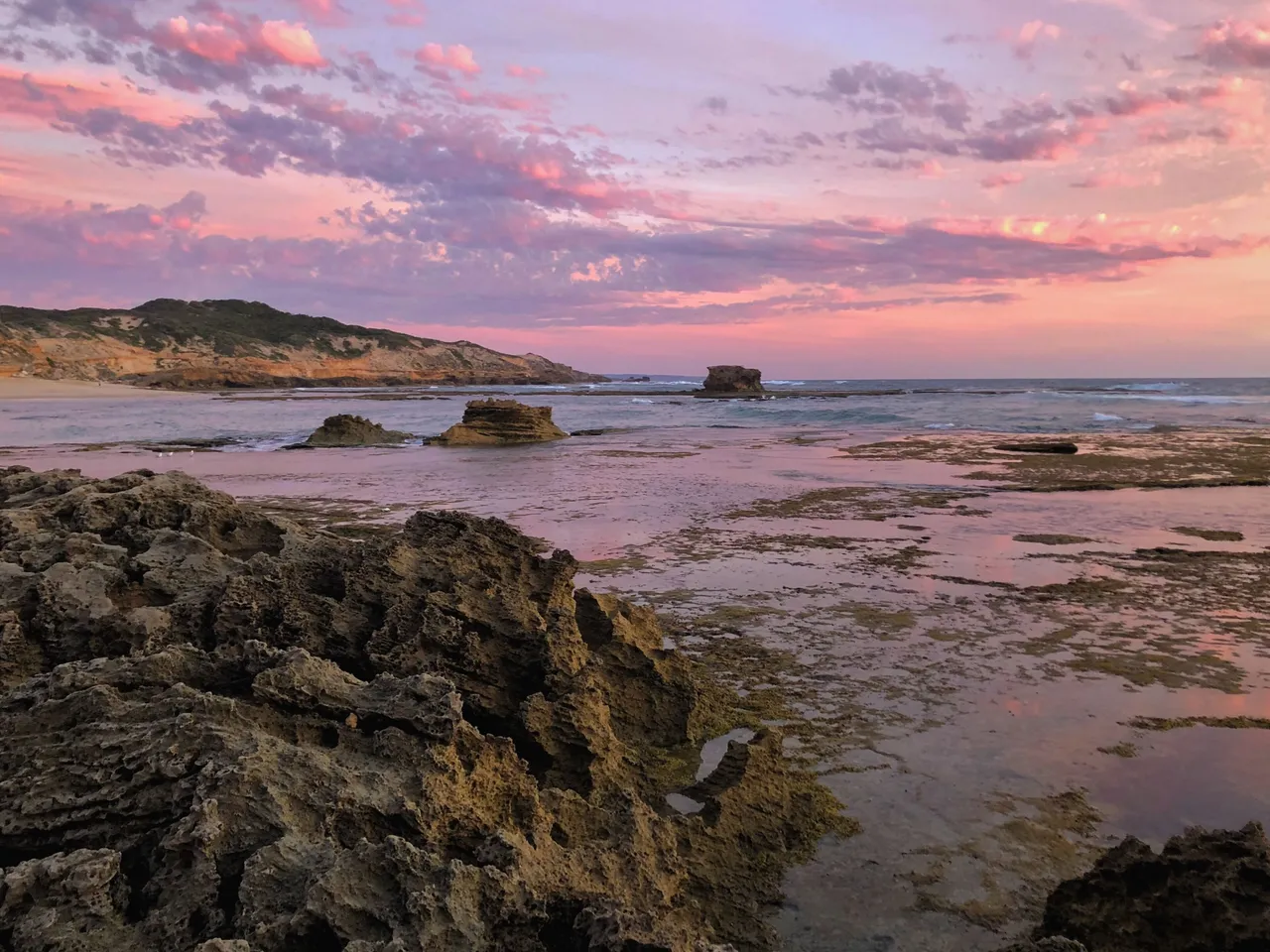
Pick one bay-side foreshore and stay there. Bring the layer you will want after the sun drops, carry out what you bring in, and treat the water as a view unless current conditions and your ability make entering it clearly safe.
Safety Beach and the Mornington foreshore work because the plan can be as short as it needs to be. A bench, a short walk and twenty unhurried minutes by the water are enough.
Weather alternative: keep the pause but move it under cover. A sheltered window seat or takeaway collected before the weather arrives preserves the shape of the evening without pretending the conditions are better than they are.
Plan three: a table-led finish
Use it when: the group needs food more than exercise, or the weather has removed the coast from the decision.
Choose the table first, verify the venue’s current service hours, then add only the walk that fits around the booking. Mornington, Dromana and Sorrento all allow a short waterfront segment without turning dinner into a cross-Peninsula transfer.
This order matters. A walk followed by a hopeful search for an open kitchen is not a plan. A confirmed table with an optional twenty-minute loop is.
Weather alternative: remove the walk and arrive early. The evening still works.
What not to do after five
- Do not start a remote or unfamiliar track on the strength of an old duration estimate.
- Do not make an exposed ocean-coast route the only plan when strong wind or rain is possible.
- Do not assume a venue is serving because its dining room appears in an article.
- Do not add a second town because the first plan felt too simple.
- Do not enter the water to rescue an otherwise quiet evening.
The first long evening
The clocks change on Sunday 4 October. Use the extra light once before trying to optimise it: one short route, one current check, one weather alternative and one easy finish.
That is enough for the first long evening.
Verified 26 September 2026 against the Reserve Bank of Australia’s daylight-saving schedule and Victorian government school term dates. Weather, warnings, access and venue service can change; check the current responsible source on the day.
Questions readers actually ask
A few practical answers.
- When does daylight saving start in Victoria in 2026?
- At 2am AEST on Sunday 4 October 2026, clocks move forward one hour to 3am AEDT. Check the time on the morning of your plan rather than relying on an old calendar entry.
- What is a good short evening plan on the Mornington Peninsula?
- Choose one short out-and-back section of the Mornington or Safety Beach foreshore, turn back at half time, and keep dinner in the same town. It gives the evening a clear shape without making the drive the main event.
- What should I check before an after-five coastal walk?
- Check the Bureau of Meteorology forecast and warnings, the responsible land manager's current access notice, the light remaining, and the return route. Exposed ocean-coast plans need more caution than a short bay-side foreshore walk.